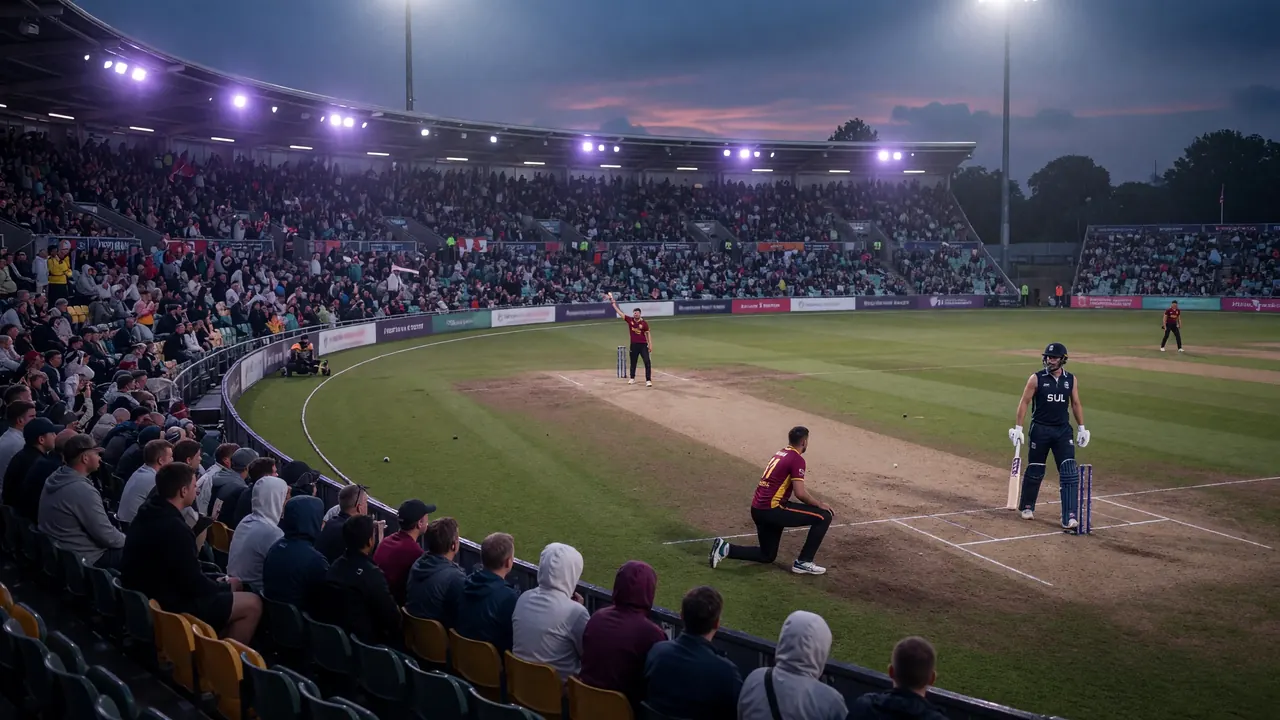
Match 17 of the English Men’s 100 League 2026 brings Trent Rockets and Sunrisers Leeds to Trent Bridge on Sunday evening, 2 August, with the first ball due at 7:00 PM IST. The Rockets sit alone at the top after three wins from four. Sunrisers Leeds arrive with two wins from three and enough batting depth to threaten any total on a surface that has already rewarded pace and clean striking this season.
For fantasy managers the fixture is less about inventing a left-field XI and more about ranking a short list of high-floor names. Ben Duckett leads the tournament run chart with 176. Mitchell Marsh has 173 for the visitors. Finn Allen’s unbeaten 72* sits inside a 123-run campaign that still carries the highest ceiling among the openers. Captain and vice-captain choices will decide most private leagues before the fifth set of five balls is bowled.
Where the two sides stand
Trent Rockets have built their early lead on a top order that has rarely failed in the same match. Duckett’s 176 tournament runs set the tone; Tom Banton and Sam Billings have given the middle overs a second gear; and the bowling group of Matt Henry, Mohammad Amir, Craig Overton and Calvin Harrison has held enough control at home to protect modest totals. Playing at Trent Bridge is a genuine edge. The Rockets know the square, the wind corridors and the lengths that hold up under the floodlights.
Sunrisers Leeds have been only slightly less convincing. Two wins from three keeps them in the upper half of the table, and the batting spine of Zak Crawley, Ryan Rickelton, Harry Brook and Mitchell Marsh is strong enough to chase 150-plus on most nights. Brook captains; Rickelton keeps wicket. The bowling mix of Brydon Carse, Matty Potts, Reece Topley and Abrar Ahmed gives them both new-ball reverse options and a wrist-spin change-up, which matters on a pitch the preview lists as pace-friendly rather than spin-dominant.
Head-to-head history currently favours the Rockets, 4–1. That sample is small and includes previous Hundred seasons under different squad compositions, so it should be treated as a soft signal rather than a locked projection. Still, home form plus the H2H lean is why most previews tip Trent Rockets to win Match 17.
Form numbers that matter for fantasy
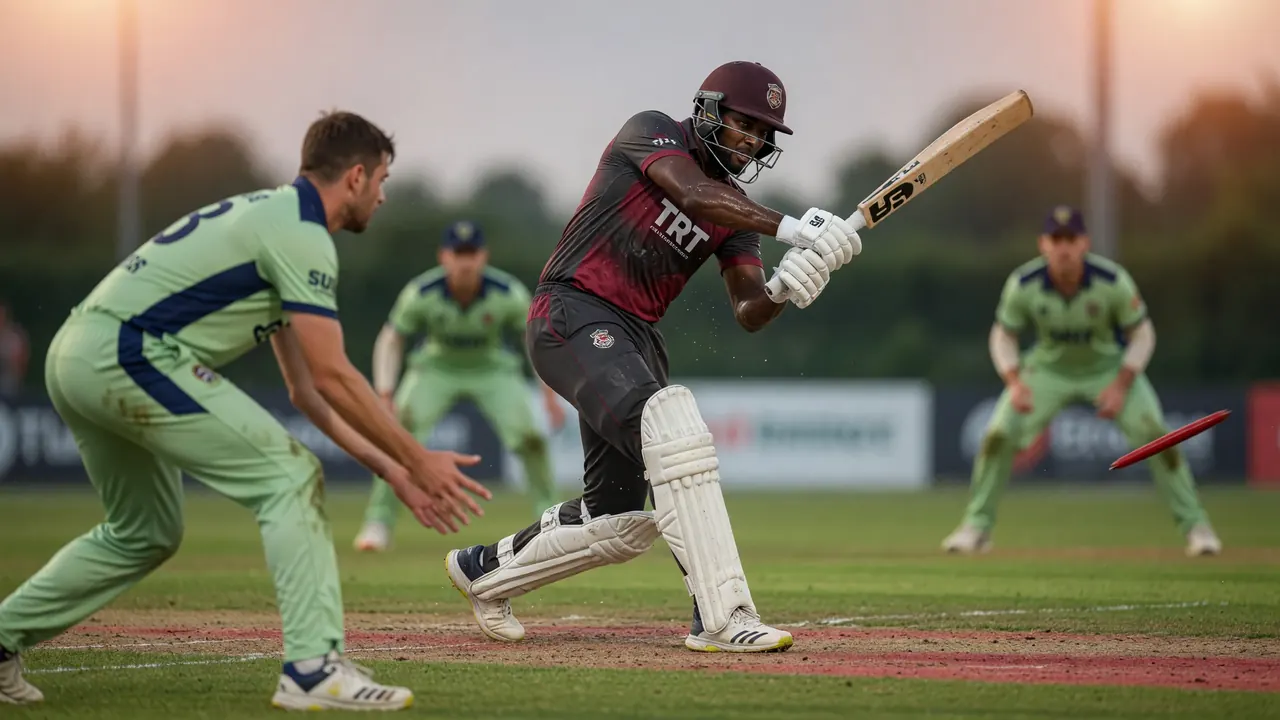
Duckett’s 176 runs make him the safest Rockets batter for ownership. He opens, faces the new ball, and has already shown he can convert starts into 40-plus scores in this format. Allen’s 123, including that unbeaten 72*, is the upside pick: when he connects, the strike rate outruns almost anyone else in either XI. Tim David remains the death-overs finisher if the Rockets bat deep; Billings, as captain and wicketkeeper, adds a second scoring path through dismissals.
For Sunrisers Leeds, Marsh’s 173 runs at a high strike rate put him in the captaincy conversation for every contest type. Brook’s floor is usually high even when the ceiling is shared with Marsh. Rickelton has 44 runs so far as the designated wicketkeeper-batter; that total is modest, but the role still bundles batting points with catch and stumping upside. Dan Lawrence’s 56 runs and one wicket make him the classic value all-rounder for cash games where salary is tight.
On the bowling side, Calvin Harrison’s four wickets and 14 runs give Rockets managers a middle-overs spinner who can also bat. Overton and Henry offer new-ball wickets on a surface listed as suited to pace. For the visitors, Carse and Potts are the primary seam threats, with Topley a left-arm angle change and Abrar Ahmed the wrist-spin option if the ball starts gripping under lights.
Pitch, weather and toss lean
The Cricket Addictor pitch note for Trent Bridge on match night is specific: 21°C, overcast, batting-friendly surface, best suited to pace, average first-innings score 148. Chasing sides have won 59 percent of comparable games. That combination usually points managers toward a slight preference for second-innings batters and new-ball seamers, without abandoning first-innings anchors entirely.
Overcast skies at 21°C can help the new ball swing for the first 20–25 deliveries. After that, the preview’s “batting-friendly” label suggests true bounce and value for players who hit through the line rather than those who need sharp turn. Fantasy builds that load three or four seam options and keep only one specialist spinner have historically matched this kind of surface better than spin-heavy combinations.
If the toss winner bowls first, expect ownership to swing toward Rockets openers and Sunrisers chasers. If the toss winner bats, Marsh and Brook become even more central as they can set or chase with equal comfort. Either way, the 148 average first-innings mark is the number to keep in mind when deciding how many pure batters to lock before the final two squad slots.
Predicted playing XIs
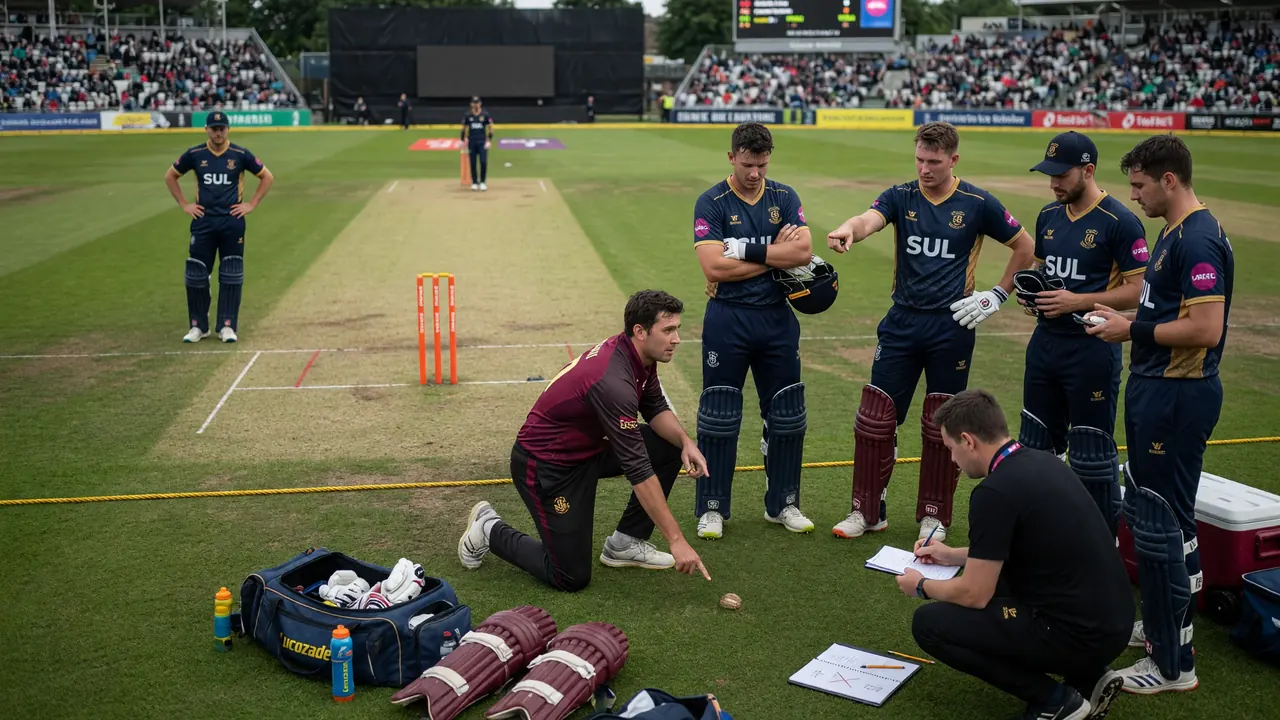
Predicted sides remain just that — predictions — until the official sheets are confirmed. The fantasy preview lists the following elevens for planning purposes.
Trent Rockets (predicted)
- Finn Allen
- Ben Duckett
- Tom Banton
- Sam Billings (c & wk)
- Tim David
- Mitchell Santner
- Lewis Gregory
- Craig Overton
- Calvin Harrison
- Matt Henry
- Mohammad Amir
Sunrisers Leeds (predicted)
- Zak Crawley
- Ryan Rickelton (wk)
- Harry Brook (c)
- Tom Alsop
- Mitchell Marsh
- Benny Howell
- Ed Barnard
- Brydon Carse
- Matty Potts
- Reece Topley
- Abrar Ahmed
Two names on those sheets often swing late ownership: Benny Howell, whose medium-pace variations can pick quiet middle-over wickets, and Mitchell Santner, who offers Rockets managers a second spinning option if the surface offers more grip than expected. David Payne and Ben Raine are flagged in the source preview as players to avoid for this fixture on current roles and recent returns.
Captain, vice-captain and build shape
The cleanest captaincy pair from the source preview is Mitchell Marsh and Finn Allen. Marsh is the safer small-league captain because of volume and role security in the middle order. Allen is the grand-league differential when managers want a Rockets opener who can outscore the field in a single set of five. Vice-captain shortlist: Ben Duckett and Ryan Rickelton. Duckett is the higher-floor VC; Rickelton is the lower-owned keeper route if managers already stack Rockets batting.
Suggested combination from the same preview is 2–4–3–2 (wicketkeeper–batter–all-rounder–bowler). That shape fits a Trent Bridge game that should produce runs and reward seam overs. A practical cash-game core looks like: Rickelton or Billings as keeper; Duckett, Allen, Brook and Crawley or Banton in the batting group; Marsh, Lawrence or Gregory plus one of Howell/Santner as all-round cover; and Harrison, Henry, Carse or Potts among the bowlers. Grand-league tweaks usually mean dropping one safe batter for a second Rockets seamer or for Abrar if the toss and early overs hint at grip.
Punt corridor: Calvin Harrison and Dan Lawrence. Harrison’s four wickets already make him more than a pure filler, and Lawrence’s dual contribution keeps him relevant even if he bowls only a few sets. Both are the names most likely to separate two otherwise identical 9/11 teams.
How to read the match for fantasy decisions
Start with confirmed XIs closer to the toss. If either side leaves out a specialist seamer, rebalance toward the batters who gain extra overs at the death. If Rickelton or Billings is rested, the keeper slot becomes a forced differential and should be filled before the final two minutes of the deadline window.
Next, weight the toss. On a surface averaging 148 with a 59 percent chase rate, second-innings batters slightly outrank first-innings anchors when the contest is winner-takes-most. In large-field guillotine or multiplier contests, that lean can justify captaining Marsh even when the Rockets bat first, because his role still spans both set-up and finish.
Finally, protect against double failure at the top. A build that locks Allen and Duckett together is fine in small leagues where the Rockets are strong favourites, but grand-league entries should usually split the openers across two teams or pair one Rockets opener with Brook or Marsh so a single new-ball spell cannot erase the whole batting spine.
Managers who want a broader framework for role weighting, venue priors and captain multipliers can work through the structured drills in Fantasy Cricket after locking tonight’s XI.
Match lean and what to watch after the toss
On current table position, home advantage and the 4–1 head-to-head lean, Trent Rockets are the side most previews expect to win. That is a form-based lean, not a lock. Sunrisers Leeds have the batting to chase 160 if Marsh and Brook fire in the same innings, and a single early Rockets collapse would flip the fantasy script toward the visitors’ middle order.
The first checkpoint after the toss is whether both predicted elevens are unchanged. The second is which captain chooses to bowl under the overcast evening sky. The third is the powerplay scoreboard at 25 balls: if it sits below 35 without wickets, pace differentials rise; if it races past 45, the finisher stack (David, Marsh, Brook) becomes the correct overweight.
For managers entering multiple contests, one simple split works well: Team A captains Marsh with Duckett as VC and a Rockets bowling lean; Team B captains Allen with Rickelton as VC and an extra Sunrisers seamer. That pair covers the two most likely scoring shapes without inventing unsupported names.
References
Source: “TRT vs SUL Dream11 Prediction Today Match, Dream11 Team Today, Fantasy Cricket Tips, Playing XI, Pitch Report, Injury Update- English Men’s 100 League 2026, Match 17”, Vicky Singh, Cricket Addictor, 2 August 2026, 09:49 AM IST.