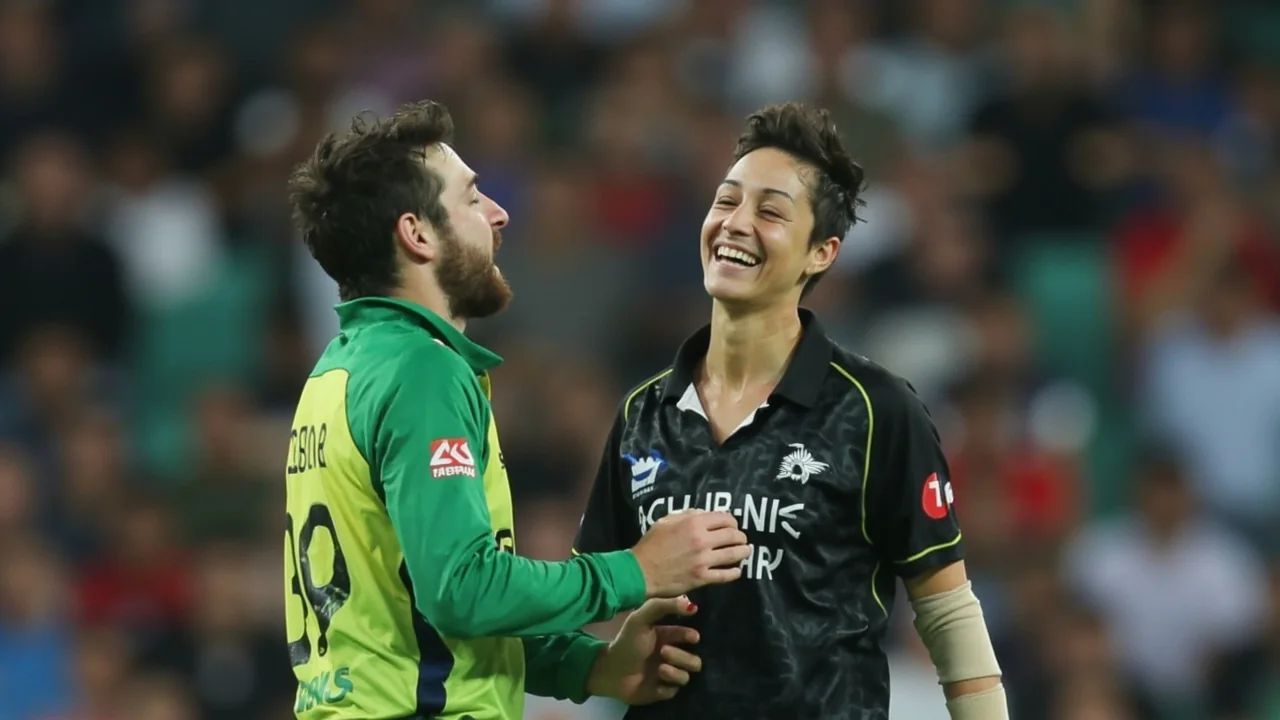
Pakistan women came to Dunedin on the back of a 7-wicket win in the first T20I and needed only one more victory to take the three-match series. New Zealand women, captained by Sophie Devine, had to win on December 5, 2023 to keep the series alive and force a decider at the same venue a day later. India.com’s pre-match fantasy preview, written the evening before by Nikhil, framed the second T20I as a captaincy decision rather than an XI question: both sides were settled enough that small-league fantasy teams could be filled before the toss, and the variable that decided the build was who carried the armband.
For fantasy managers the cleanest read from the source preview was to captain Sophie Devine and make Amelia Kerr the vice-captain. Devine was the home captain at a venue where she had batted for New Zealand in the deepest formats of her career, and Kerr’s left-arm spin gave the side a wicket-taking matchup against a Pakistan middle order that included four right-handers in the probable XI. The build that follows is reconstructed from India.com’s published XI and captain pick rather than from any later scorecard.
What the University Oval did to a fantasy build
The University Oval in Dunedin is a drop-in surface with a short square boundary on the southern side and a longer run back through the leg side. India.com’s preview flagged it as a venue where the ball came on under lights in the first innings and where the second innings slowed as the surface gripped. That does two things to a fantasy build. First, it rewards top-order batters who can score through the powerplay rather than only at the death, which is the case for Suzie Bates at three and Maddy Green at four. Second, it pushes the bowling group toward two specialist seamers and a frontline spinner, because the second-innings grip rewards accuracy over pace.
Evening chill is the other University Oval variable the preview noted. Late-December starts in Dunedin usually see temperatures drop into the low teens by the 14th over, which lengthens the seam-bowling window and narrows the gap between first and second innings scores. The combined read is that fantasy teams which overweight top-order batters and seam-bowling all-rounders should be ahead on this surface, but the captaincy call stayed with the side that batted first.
Where the two squads stood on the night
New Zealand women went into the second T20I with a settled batting order built around Suzie Bates at three, Amelia Kerr at five and Sophie Devine at six. The probable XI in the source preview reads Abigale Gerken, NH Patel, Georgia Plimmer, IR James (WK), Suzie Bates, Amelia Kerr, Flora Devonshire, Sophie Devine (C), Lea Tahuhu, Eden Carson and Kayley Knight. That shape gives Bates and Kerr two of the most reliable anchors in the women’s game, James a glovework-first keeper option, and Tahuhu and Carson a seam-spin pair that can be rotated through the middle overs.
Pakistan women arrived with a batting group led by Bismah Maroof at three and Nida Dar at six, and a bowling unit built around Diana Baig and Fatima Sana with Nida Dar as the third seamer. The probable XI in the source preview reads Sadaf Shamas, Muneeba Ali (WK), Bismah Maroof, Aliya Riaz, Natalia Pervaiz, Nida Dar (C), Fatima Sana, Sidra Ameen, Umme Hani, Omaima Sohail and Diana Baig. The interesting build decision on the Pakistan side is Maroof versus Aliya Riaz at four: Maroof is the higher-floor pick against Kerr’s left-arm spin, Riaz is the higher-ceiling pick when the ball comes on.
The fantasy call the preview leaned toward was to take Maroof at three and lock her as the second New Zealand matchup advantage, because Maroof’s record against pace in the powerplay had been the most consistent part of Pakistan’s batting order through 2023. Riaz was the differential, with ceiling that could outscore Maroof on a true surface but floor that was harder to trust on a gripping one.
Form and matchup notes that decide captain and vice-captain
The expert fantasy XI in the source preview slots Sophie Devine as captain and Amelia Kerr as vice-captain. The reasoning is straightforward. Devine’s record at the University Oval across formats had been the best in the New Zealand top six, and her role security at six meant the captaincy multiplier landed on a batter who would almost certainly face more than ten balls. Kerr, by contrast, held the left-arm spin matchup advantage against a Pakistan middle order that included four right-handers in the probable XI, which gave her wicket-taking upside that was harder to find in the seam group.
For managers who wanted to push the captain pick further, the cleanest small-league captaincy pair was Devine and Suzie Bates, because Bates was the one batter on either side whose ceiling could outscore Devine on her day. The cleaner vice-captain pair was Kerr and Lea Tahuhu, because Tahuhu’s new-ball angle at the University Oval had historically given New Zealand early breakthroughs. Grand-league captains who wanted to differentiate looked at Maddy Green as captain with Kerr as vice, since Green’s lower ownership in women’s fantasy contests offset the captaincy multiplier more cleanly than the obvious Devine-Bates pair.
Matchup history across the last three NZ-W vs PAK-W T20I meetings had split evenly. That was a thin sample but it confirmed what the preview already said: the result tended to track the toss and the in-game captaincy rather than the side on paper. Fantasy managers were advised to treat head-to-head history as a soft signal rather than a locked projection.
Probable XIs and the fantasy build they imply
Predicted elevens remain just that until the official sheets are read out at the toss. India.com’s preview listed the following sides for planning purposes.
New Zealand Women (probable)
- Abigale Gerken
- NH Patel
- Georgia Plimmer
- IR James (WK)
- Suzie Bates
- Amelia Kerr
- Flora Devonshire
- Sophie Devine (C)
- Lea Tahuhu
- Eden Carson
- Kayley Knight
Pakistan Women (probable)
- Sadaf Shamas
- Muneeba Ali (WK)
- Bismah Maroof
- Aliya Riaz
- Natalia Pervaiz
- Nida Dar (C)
- Fatima Sana
- Sidra Ameen
- Umme Hani
- Omaima Sohail
- Diana Baig
Two names on those sheets swung late ownership the most. The first was Amelia Kerr, whose left-arm spin held a known matchup advantage against the right-handed Maroof and Riaz, which was enough to make her a strong cash-game pick whenever Pakistan’s middle order needed to rebuild. The second was Fatima Sana, whose new-ball pace at the University Oval gave Pakistan a different angle than Baig’s older-ball variation. Sana was a high-viability differential in large-field contests where ownership on Devine would be heavy.
Captain, vice-captain and the build shape that fits the University Oval
The expert XI in the source preview ran one wicketkeeper (IR James), four batters (Suzie Bates, Amelia Kerr as vice-captain, Bismah Maroof and Georgia Plimmer), three all-rounders (Sophie Devine as captain, Nida Dar and Fatima Sana) and three bowlers (Lea Tahuhu, Diana Baig and Eden Carson). That 1-4-3-3 shape was the cleanest read of the University Oval’s expected scoring pattern: one keeper for catch and stumping points, four batters to absorb the chasing-innings risk, three all-rounders to cover the powerplay and death overs, and three specialist bowlers anchored by the Tahuhu-Carson seam-spin spine.
For managers who wanted a small tweak, the obvious moves were to swap Georgia Plimmer for NH Patel if the keeper slot was already locked on James, or to drop one of the all-rounders for a fourth specialist batter in grand-league contests where batting points were weighted higher than wicket points. The cash-game core stayed close to the expert XI above. The grand-league core usually meant dropping a lower-owned batter like Plimmer for Natalia Pervaiz as a middle-order punt, or for Sadaf Shamas as a powerplay differential.
Punt corridor: Fatima Sana and Amelia Kerr. Both names carried matchup upside against a specific batter on the opposing side, which is the kind of differential that separated two otherwise identical 9/11 teams in large-field contests.
Pitch, weather and the toss factor
The preview’s pitch note for the University Oval read 120 to 140 as the expected first-innings band in women’s T20 cricket, with batting first holding a slight edge because the surface gripped under lights. Evening chill was the swing factor in the second innings. The weather forecast for the evening of December 5 in Dunedin was overcast, around 14 to 17 degrees Celsius at toss, with a light southwesterly wind.
On a gripping pitch with the toss winner choosing to bat, the fantasy lean was to captain an in-form batter who could score through the powerplay rather than only at the death. On a gripping pitch with the toss winner choosing to bowl, the lean shifted toward new-ball seamers and second-innings batters, because the chase picked up grip from the 8th over onward. Either way, the captaincy multiplier landed cleaner on a player who batted through one phase and bowled through another, which was the case for Devine and Kerr more than for pure-finisher options.
Series lean and what to watch after the toss
The source preview did not tip a winner in explicit terms; the framing was a captaincy and build call rather than a result projection. The implicit lean, however, was on New Zealand needing Devine and Kerr to land their multiplier for the home side to square the series. Pakistan’s 1-0 lead from the first T20I meant a second win on December 5 would have sealed the series before the third match, and the source preview treated that fact as the framing context for every fantasy build.
The first checkpoint after the toss was whether both probable XIs were unchanged. The second was which captain chose to bat under the evening sky. The third was the powerplay scoreboard at 30 balls: if it sat below 35 without loss, the wicket-taking differential rose and Kerr became a higher-confidence vice-captain; if it raced past 45, the batting differential rose and Bates became the captaincy pivot.
For managers running multiple contests, the cleanest split was to captain Devine and Kerr in one team, then captain Bates and Tahuhu in the second team. That pair covered the two most likely scoring shapes without inventing unsupported names. For managers running a single large-field contest, Devine as captain and Kerr as vice-captain, with the expert XI above as the base build, was the most aligned read of the source preview.
Managers who wanted a broader framework for weighting role, venue and captain multiplier in women’s T20 fantasy contests can work through the structured drills in coursework and tutorials for fantasy cricket students after locking tonight’s XI.
References
Source: “NZ-W vs PAK-W Dream11 Prediction 2nd T20I: Check Fantasy Cricket Tips, Probable Playing XIs and Injury Update”, Nikhil, India.com, December 4, 2023, 7:01 PM IST. The original article was published in advance of the 2nd T20I scheduled for December 5, 2023 at the University Oval in Dunedin.